
Public broadcasting
When broadcasting switches to the disaster-recovery site — Télé-Québec
A complete broadcast monitoring room, deployed on emergency footing at the disaster-recovery data center — rented, and dismantled when the need ended.
- Client
- Télé-Québec
- Industry
- Public broadcasting
- Location
- Montreal
- Services
- AV and broadcast integration · Support and fleet life extension
- Equipment
- Multiviewers · TV Logic reference monitors · Kiloview SDI-NDI converters · Cable and TV off-air returns
- Outcome
- A complete broadcast monitoring room, deployed on emergency footing at the disaster-recovery data center — rented, and dismantled when the need ended.
The context
Like any serious broadcaster, Télé-Québec maintains a disaster-recovery site: a data centre installation ready to take over broadcasting if the main site can’t. In late summer 2024, that scenario went from theory to practice: broadcasting had to operate from the DR site, for an extended period.
A DR site broadcasts — but you still have to be able to see what it’s broadcasting. Télé-Québec called us to outfit the monitoring.
The constraint
Two constraints stacked up. Time, first: every day without full monitoring is a day the technical team watches its channel blind. Duration, second: the need was real but temporary — buying a complete monitoring room for a few weeks would have wasted public funds.
What we did
We deployed a complete monitoring room at the data centre, within days: multiviewers, broadcast reference monitors, control displays, 5.1 audio chains, and the SDI-NDI converters to tie it all into the site’s infrastructure.
The detail that matters: off-air returns. We installed reception points for the signals as received by distributors — cable and television — so the team could verify not what the site transmits, but what the public receives. That’s the only check that truly counts.
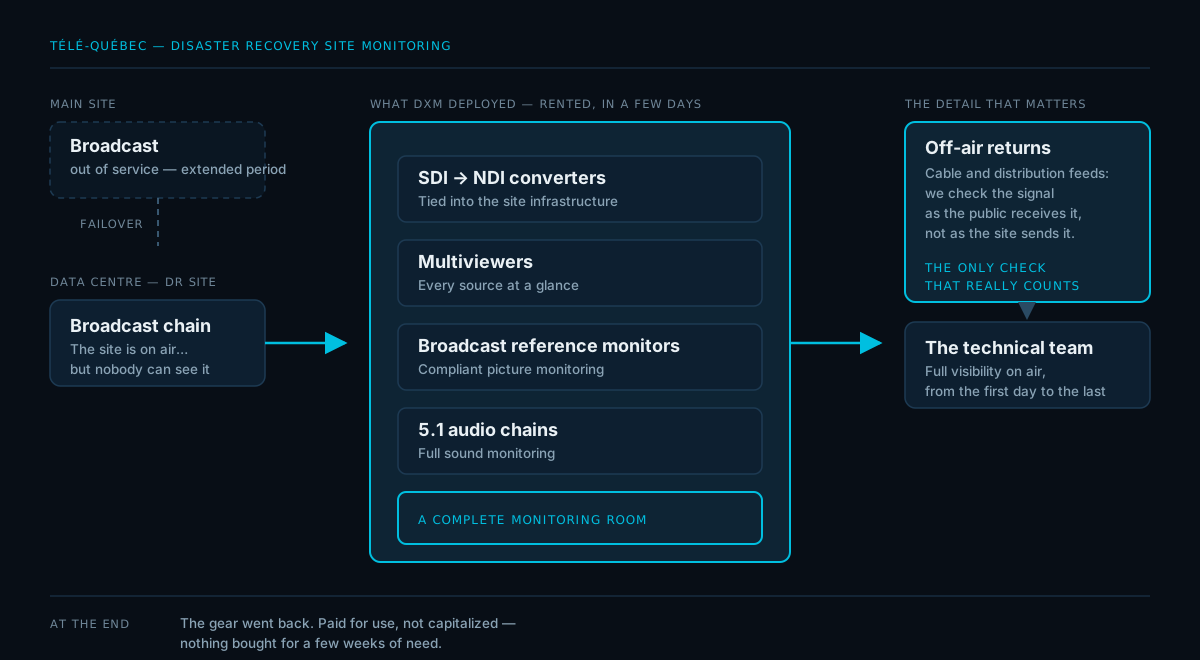 What was deployed in the data centre, and why off-air returns change everything.
All of it rented: Télé-Québec paid for use, not for capital. When the operation ended, the equipment left.
The result
Télé-Québec’s team operated its broadcast from the DR site with full visibility on its channel, from the first day to the last. No equipment bought for nothing, no compromise on control.
Everyone has a disaster-recovery plan on paper. The difference shows the day you have to use it — and on that day, your partner’s speed of execution is part of the plan.
Describe what you need to do, not what you think you need to buy. We point you to the right person at DXM, and we say so when it isn’t for us.
Phone : 514 447-4860
Email : info@dxmtech.com