Technologies & PartnersHaivision

Authorized Haivision partner
Haivision in Quebec — encoding, video transport and SRT
Haivision integrator in Quebec: Makito encoders, low-latency video transport and SRT links for contribution and live distribution.
What we do with Haivision
Haivision does video encoding and transport: taking a production signal and sending it elsewhere, with latency low enough to stay usable live.
The SRT protocol, which they created, is now used across the industry. It carries quality video over ordinary internet links while absorbing packet loss — which completely changes the economics of a contribution link.
We integrate it for site-to-site contribution, field-to-studio return, and distribution to multiple destinations.
What we deliver: sizing against your bitrate and acceptable latency, integration into your chain, profile configuration, and support.
The Makito X4, plainly
It’s the encoder we deploy most. Four SDI inputs, 12G for 4K, native SRT output, and latency low enough for live with talkback.
What it encodes. 4K UHD, quad-HD, HDR. H.264 or HEVC depending on what your chain accepts at the other end.
How it outputs. SRT natively, but also the classic formats — the goal isn’t to lock you into one protocol.
Why density matters. A rack version holds up to sixteen encoders in a single chassis. For a facility handling dozens of feeds, that changes floor space, power draw and cabling.
The interface. A web dashboard showing every feed, its bitrate and its state. That’s what lets someone who isn’t an engineer see that a link has dropped.
What SRT changes
Haivision created SRT, then opened it up. That’s why the protocol now shows up in nearly every encoder in the industry, including their competitors’.
What it does: carry quality video over an ordinary internet link, absorbing packet loss and jitter instead of dropping. It also encrypts the stream, which matters when content travels over a public network.
In practice it replaces dedicated circuits that cost considerably more — for cases where a few hundred milliseconds of latency is acceptable.
Questions we get asked
“Is it better than satellite?” Depends on the route and the budget. A well-configured SRT link costs a fraction of a satellite circuit and deploys in minutes — but it depends on a network we don’t control. We look at both ends before recommending.
“What latency can we reach?” Low enough for live with talkback, in most cases. The exact figure depends on your network path — we measure it rather than promise it.
“Does it work with our current gear?” Generally yes. That’s one of SRT’s strengths: it adds to an existing chain instead of replacing it.
“How many feeds can we handle?” Depends on resolution and codec. A properly sized rack encoder handles several simultaneous feeds; we calculate from your real formats.
“Is the stream secure?” SRT encrypts the transport. For sensitive content crossing a public network, that’s the question to ask — and the answer is yes.
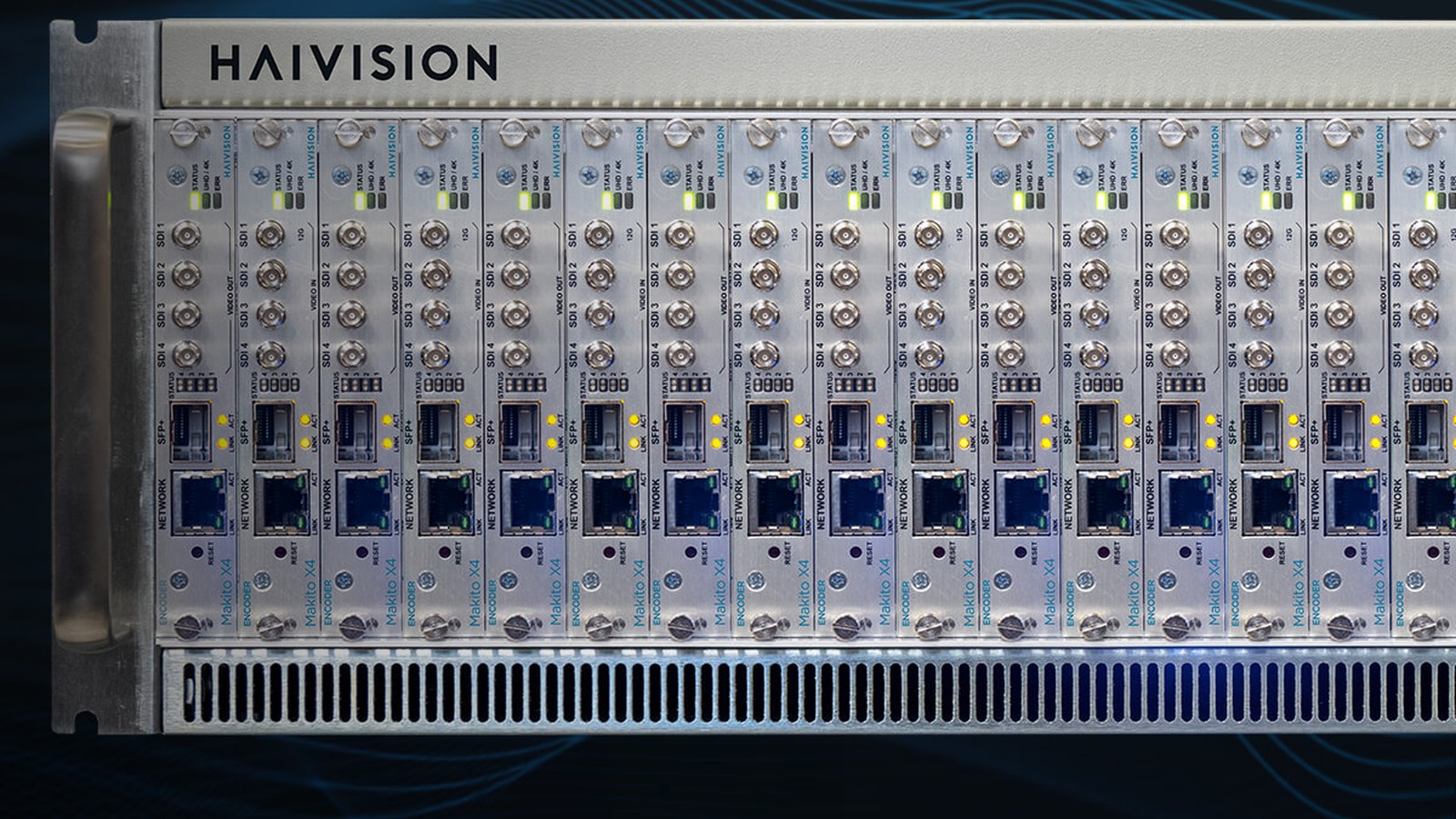 NewMakito X44K UHD and HDR encoder with native SRT: quality live video over an ordinary internet link, no dedicated circuit.
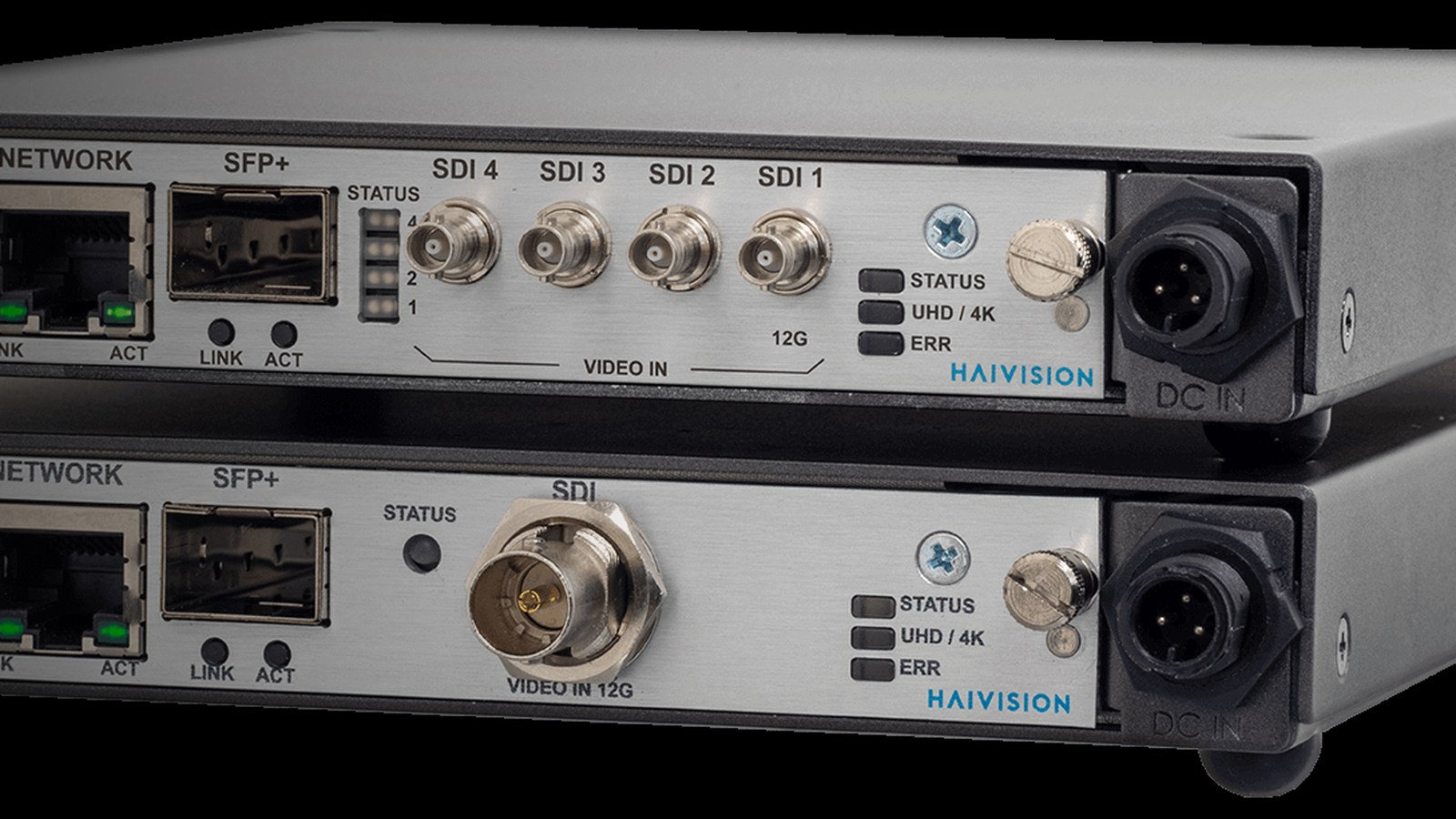 Makito X4 in a rackUp to sixteen encoders in a single chassis — the density you need when a facility handles dozens of feeds.
- New
Makito X4
4K UHD and HDR encoder with native SRT: quality live video over an ordinary internet link, no dedicated circuit.
Makito X4 in a rack
Up to sixteen encoders in a single chassis — the density you need when a facility handles dozens of feeds.
Describe what you need to do, not what you think you need to buy. We point you to the right person at DXM, and we say so when it isn’t for us.
Phone : 514 447-4860
Email : info@dxmtech.com