
National broadcasting
Emergency mode: putting Bell Media back on the air
National channels dark on Friday morning, baseball on the air Sunday night — then full temporary studios, a virtual set and a routing backbone built in the weeks that followed.
- Client
- Bell Media (RDS, Noovo)
- Industry
- National broadcasting
- Location
- Montreal / Toronto
- Services
- AV and broadcast integration · Virtual production and virtual studios · Infrastructure, media storage and post-production
- Equipment
- LiveU · Riedel MediorNet MicroN · Blackmagic Ultimatte · Unreal Engine · EditShare · AJA FiDO · Simply Live · vMix
- Outcome
- National channels dark on Friday morning, baseball on the air Sunday night — then full temporary studios, a virtual set and a routing backbone built in the weeks that followed.
The context
A Friday morning in August 2024, 6:30 a.m. A text comes in: video of water pouring into the parking garage of Bell Media’s building in downtown Montreal. A major water main has just burst near several media companies.
At 9 a.m., the power is cut. Bell Media’s channels go to black.
Our reply to that first text had been simple: “We’re here, and we won’t let you down.” The rest of this story is what that sentence meant in practice.
The constraint
A national broadcaster doesn’t “close” while repairs happen. Content had to get back on air in days, not weeks — without yet knowing where it would be broadcast from. The only certainty: whatever the location, it would take reliable video links between Montreal and Toronto, and mobile production capacity.
And the damaged building wouldn’t reopen anytime soon. What started as an emergency weekend would become the construction of complete temporary production facilities.
What we did
The sprint: Friday to Sunday night
On Friday, while temporary-site scenarios were being weighed, we recalled every available LiveU unit and mobilized a mobile production unit. At 9 p.m., leadership decided: a building on Nuns’ Island would serve as the base — and the absolute priority was the ability to broadcast from Toronto.
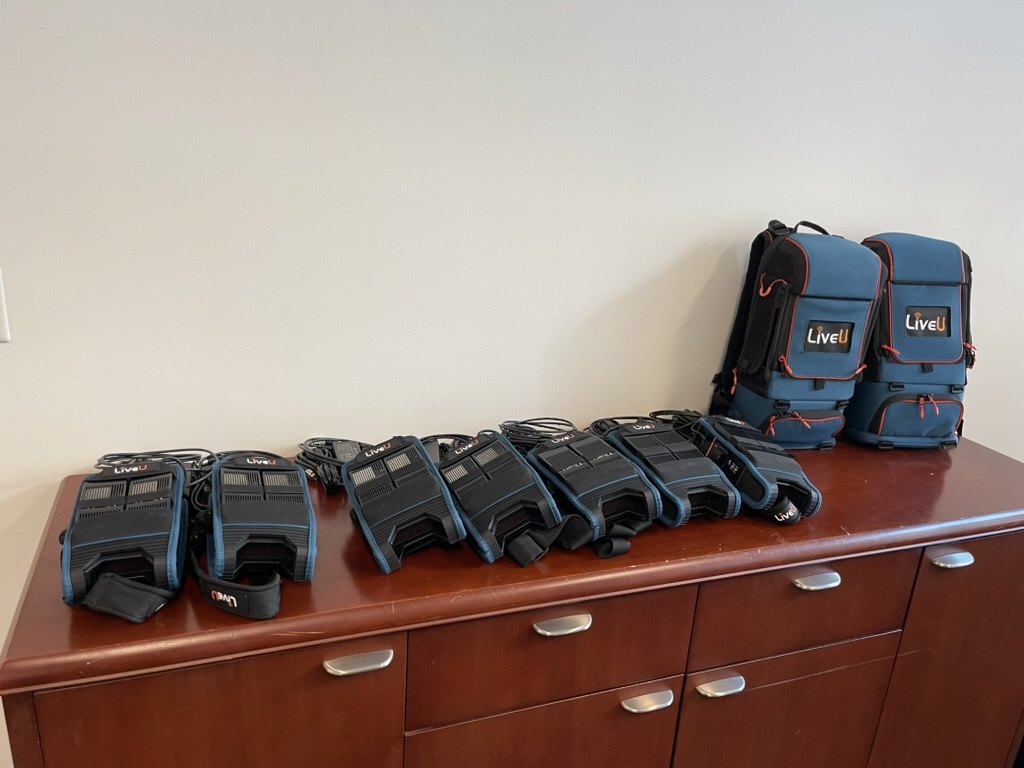
Saturday: a Montreal–Toronto round trip. Eight transmission links and eight reception links installed there, so broadcasting would be possible no matter which site was chosen. The overnight drive back, with every metre of available cabling in the vehicle.
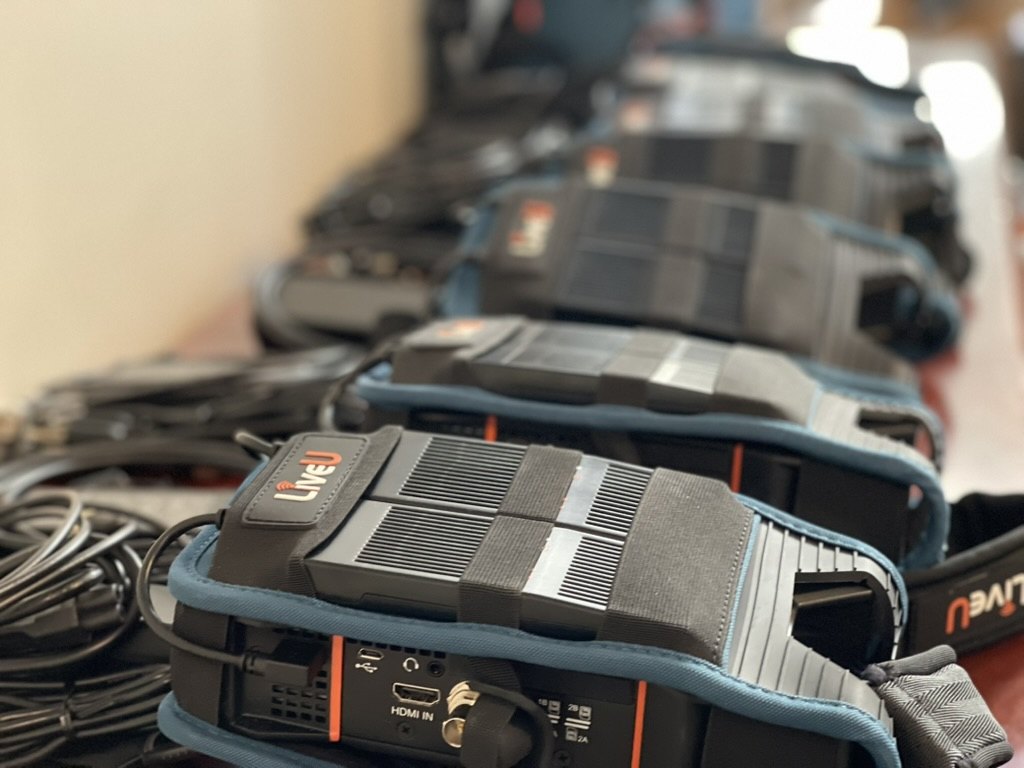
Sunday, on site at Nuns’ Island: a temporary transmission point, backup connectivity through Bell Telecom event modems, while Bell Media’s teams deployed vMix control rooms and temporary studios for RDS and Noovo. That evening, the baseball game was on the air — barely a few minutes late.
On Monday, the mobile production truck took position for Noovo’s 5 p.m. newscast, and we added EditShare shared storage with a 10 Gb network to connect production and post-production.
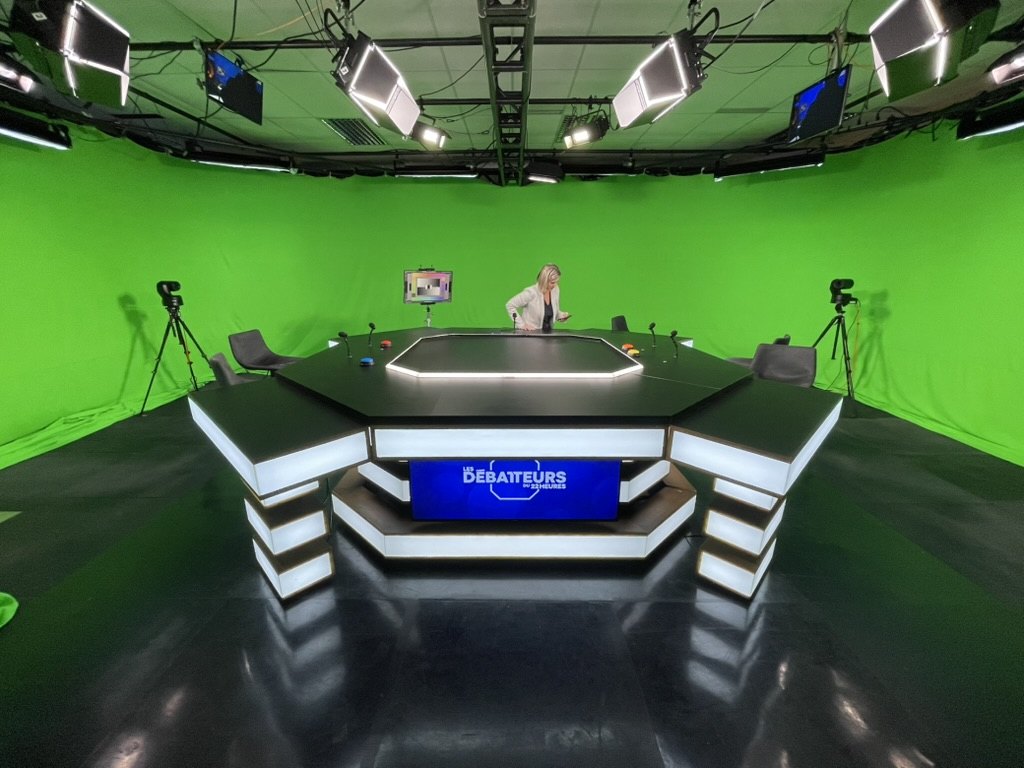
Phase 2: Les Débatteurs, virtual — in five days
Returning to the building wasn’t going to happen fast. The camp had to grow, and RDS’s show Les Débatteurs had to be back on air the following week — without its studio.
Our technology director, Éric Nolin, had been pushing the same idea since day one: a virtual set. A demo built at his home with a camera, reflective fabric and a green ring light; the demo redone the next day for Bell’s teams. The idea landed. The Débatteurs set was recreated in an Unreal environment by the show’s designer, the keying built on Blackmagic Ultimatte processors for a result that holds up on air, and the set built with portable capture kits.
Five days later, opening night: on the air. The result convinced everyone — three more multi-purpose green-screen studios followed for RDS and Noovo shows.
The infrastructure born of the emergency
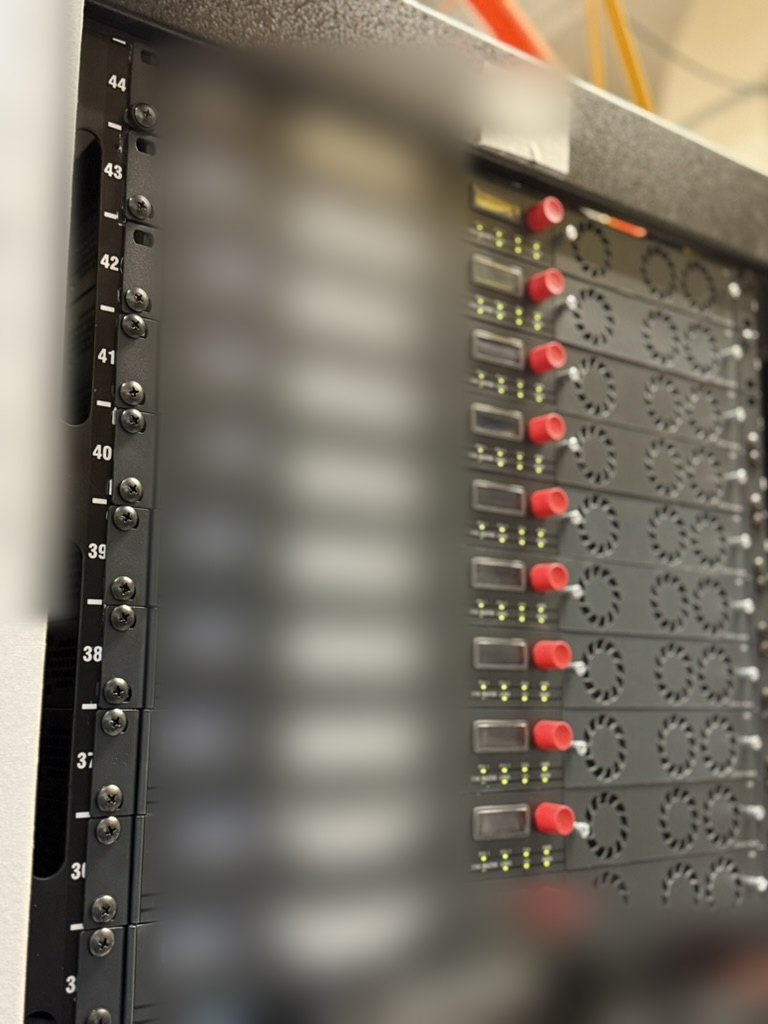
Connecting all those studios required a real routing backbone. A large centralized router would have taken too long to deploy; we chose a decentralized SDI architecture on Riedel MediorNet MicroN — 12x12 nodes linked over fibre, able to scale to 192x192. Fourteen nodes ordered directly from Germany, delivered in three days, grown to twenty-four over the following weeks.
In parallel, the equipment hunt: our team scoured the North American stock of Ultimatte units — driving to New York for the last ones available — along with the converters and AJA FiDOs to go with them. Urgent need for replay servers? One of ours left on a Sunday for Pennsylvania to pick up two Simply Live servers, in service Monday.
The result
Channels dark on Friday morning. Baseball on air Sunday night. A newscast on Monday. A virtual set in five days. And complete temporary facilities — studios, routing, storage — that carried the programming while the building recovered, with our team on site seven days a week, for weeks on end.
This project has an internal nickname: the ER doctor. It’s the role we take on — and it shows best on our clients’ worst days.
When everything went down, DXM was there before we even finished stating the need. Concrete solutions, delivered at a speed I had never seen. A team on fire.
What struck me most, beyond the technical expertise, was the DXM team’s ability to anticipate issues, propose innovative solutions and commit fully alongside our own teams. In an emergency, that collaboration was a key part of our success.
Describe what you need to do, not what you think you need to buy. We point you to the right person at DXM, and we say so when it isn’t for us.
Phone : 514 447-4860
Email : info@dxmtech.com