
National broadcasting
Born in the emergency, kept for good — Bell Media’s Riedel backbone
A routing architecture chosen under pressure, validated by use, then extended in phases — the best proof that an emergency decision can be a sound architecture decision.
- Client
- Bell Media
- Industry
- National broadcasting
- Location
- Montreal
- Services
- AV and broadcast integration · Infrastructure, media storage and post-production
- Equipment
- Riedel MediorNet MicroN · Decentralized SDI routing · Optical fibre
- Outcome
- A routing architecture chosen under pressure, validated by use, then extended in phases — the best proof that an emergency decision can be a sound architecture decision.
The context
This backbone wasn’t born from a five-year plan. It was born during the August 2024 emergency operation, as Bell Media’s temporary studios multiplied on Nuns’ Island and had to be connected to each other — fast.
The architecture question came up under maximum pressure: how do you route dozens of signals between sets, control rooms and transmission links, in facilities that didn’t exist two weeks earlier?
The constraint
A large centralized router would have been the classic reflex — and the wrong choice: too long to deliver, too long to wire, too rigid for a site that changed shape every week. Going full IP (SMPTE 2110) would have been worse still in that context: no time to build and validate a network of that complexity.
It took an architecture that deploys in pieces, grows without reinstallation, and can be ordered now.
What we did
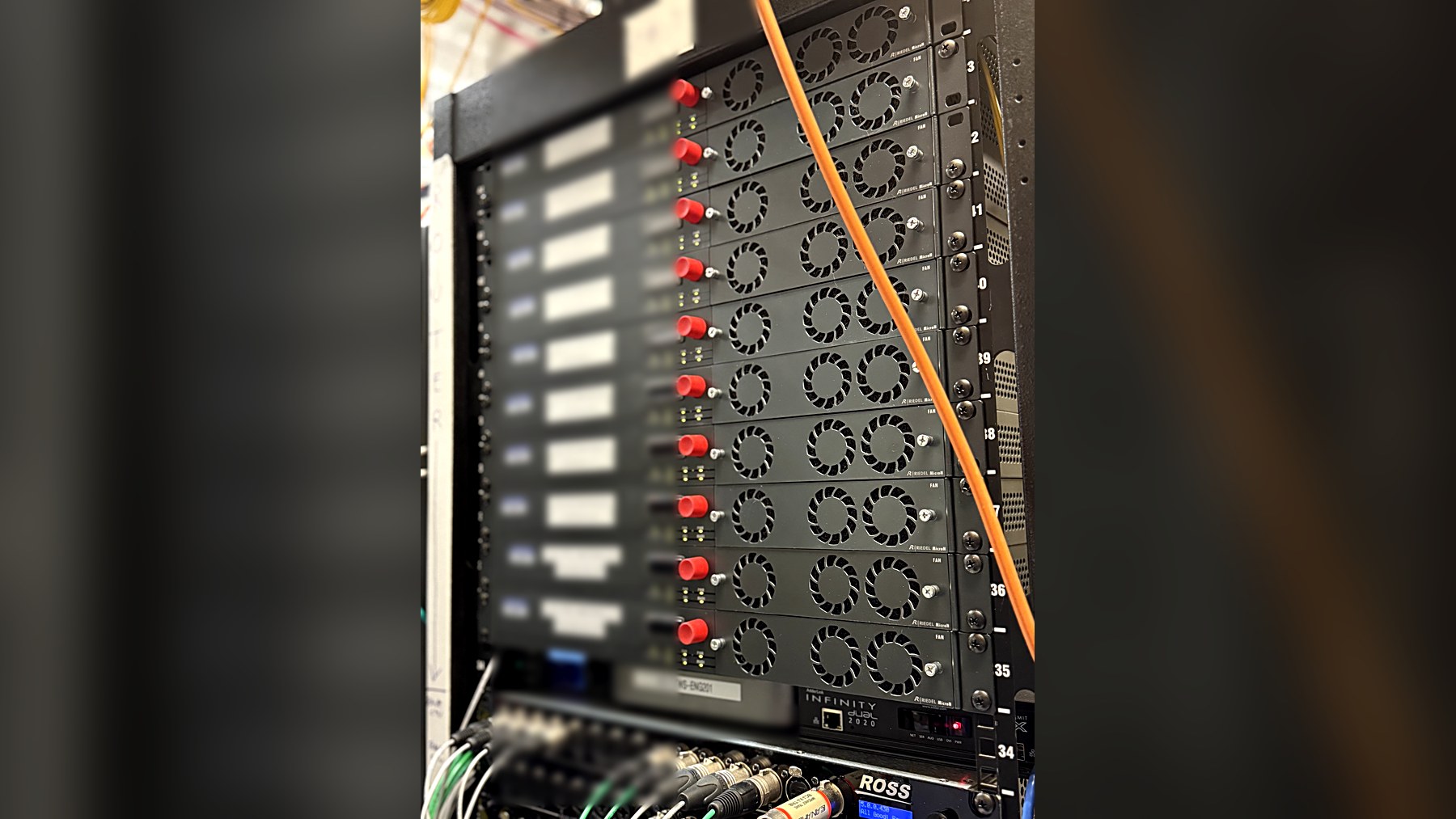
We proposed a decentralized SDI matrix on Riedel MediorNet MicroN: compact 12x12 nodes, linked over fibre, together forming a distributed matrix able to scale to 192x192. Each new set gets its node; the fibre does the rest.
Fourteen nodes were ordered directly from Germany and delivered in three days. The architecture grew at the pace of the studios, up to twenty-four nodes — each addition connected without touching the rest of the network, each configuration documented as it went in.
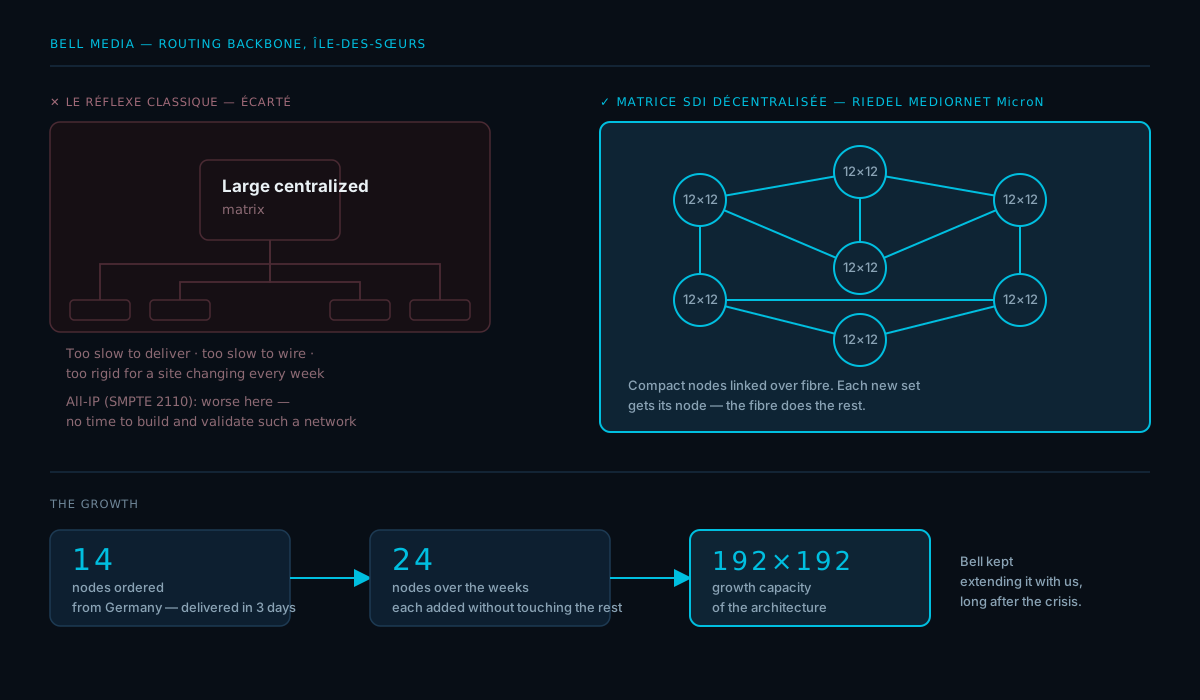 The architecture choice, and the growth that followed.
The result
The backbone carried the temporary facilities’ routing through the entire operation — and it outlived the emergency that created it: Bell Media kept extending it with us, through successive expansions, long after the crisis.
It’s the most honest architecture test there is: a system chosen in three days, under real constraint, that the client decides to keep and grow once the dust settles.
Describe what you need to do, not what you think you need to buy. We point you to the right person at DXM, and we say so when it isn’t for us.
Phone : 514 447-4860
Email : info@dxmtech.com