Stage · Real time
Virtual production
The stage becomes an environment, not a green screen.
What we actually do
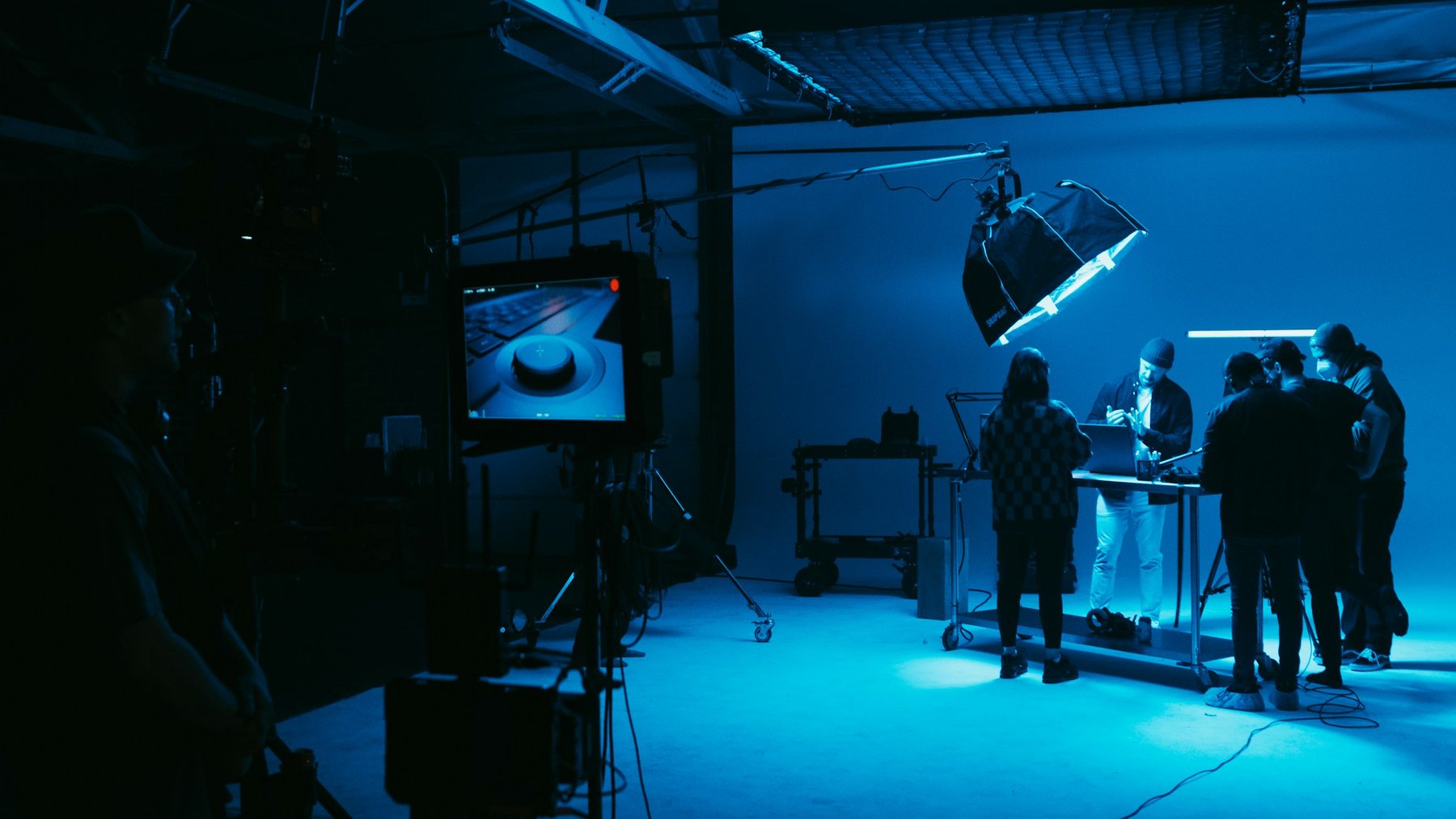
We work with Aximmetry as a render engine and Z CAM cameras depending on the stage.
- Virtual production stage design
- Camera tracking and real-time render integration
- Colour calibration and management
- Connection to capture and post-production workflows
Green screen or LED wall: the honest answer
Both do virtual production — and they don’t cost the same. Green screen with advanced keying delivers a broadcast-ready image for a fraction of the cost of an LED volume; the LED wall gives you real reflections and talent who can see the set. The right choice depends on what you produce, how often, and for which final screen. We advise based on your production — not on what’s most profitable to sell.
How a project unfolds
Proof before budget. A virtual set can be demonstrated. We build a small-scale validation — your content, your show format — before you commit the budget for the full stage. You decide on something concrete, not on a promise.
Stage design. Surface, camera tracking, lighting, render engine, keying: every piece gets chosen for the final image you’re after and the teams who will run it daily.
Integration with everything else. A virtual studio that lives alone is useless. We connect it to your capture, your control room and your post workflow — one more stage in your ecosystem, not an island.
Training. The stage is delivered when your operators run it without us. Keying, set changes, calibration: your teams learn on their own system, not from a manual.
Questions we get asked
“Will our operators actually be able to run it?” Yes — that’s a design criterion, not a wish. We pick tools that real production teams operate daily, and training is part of the project.
“Does it absolutely require Unreal?” No. The render engine gets chosen based on the complexity of your sets and the skills you have. From photorealistic Unreal environments to simpler backdrops, there’s a gradient — and a budget for every step on it.
Describe what you need to do, not what you think you need to buy. We point you to the right person at DXM, and we say so when it isn’t for us.
Phone : 514 447-4860
Email : info@dxmtech.com